

The panel is flat. The table never is.
Anyone who works with ACM knows the scene: the V-groove starts out perfect and, a meter down the panel, goes shallow. Or too deep, and it breaks through the back face. The operator stops the machine, measures, corrects Z, starts over. On a five-meter panel, that repeats section after section.
The cause was never the panel or the cutter. It is the spoilboard: it wears down with use, warps with humidity and is never perfectly flat. A rigid head followed the programmed coordinate, while the panel, resting on an uneven surface, rose and fell underneath it.
For decades the answer was always the same: patience and rework. Surface the table before every job, cut the groove in successive shallow passes, calibrate again. A job that should have taken an hour ate up a full shift, and the result still came down to the operator's touch.
Born on the shop floor, not at a drawing board
A tool like this is not invented by someone studying the problem from a distance. It is invented by someone losing a day of work to it.
Today the Floating Head is the technology that defines DaMaquina CNC: proof that a Brazilian manufacturer can develop what the import market does not offer.
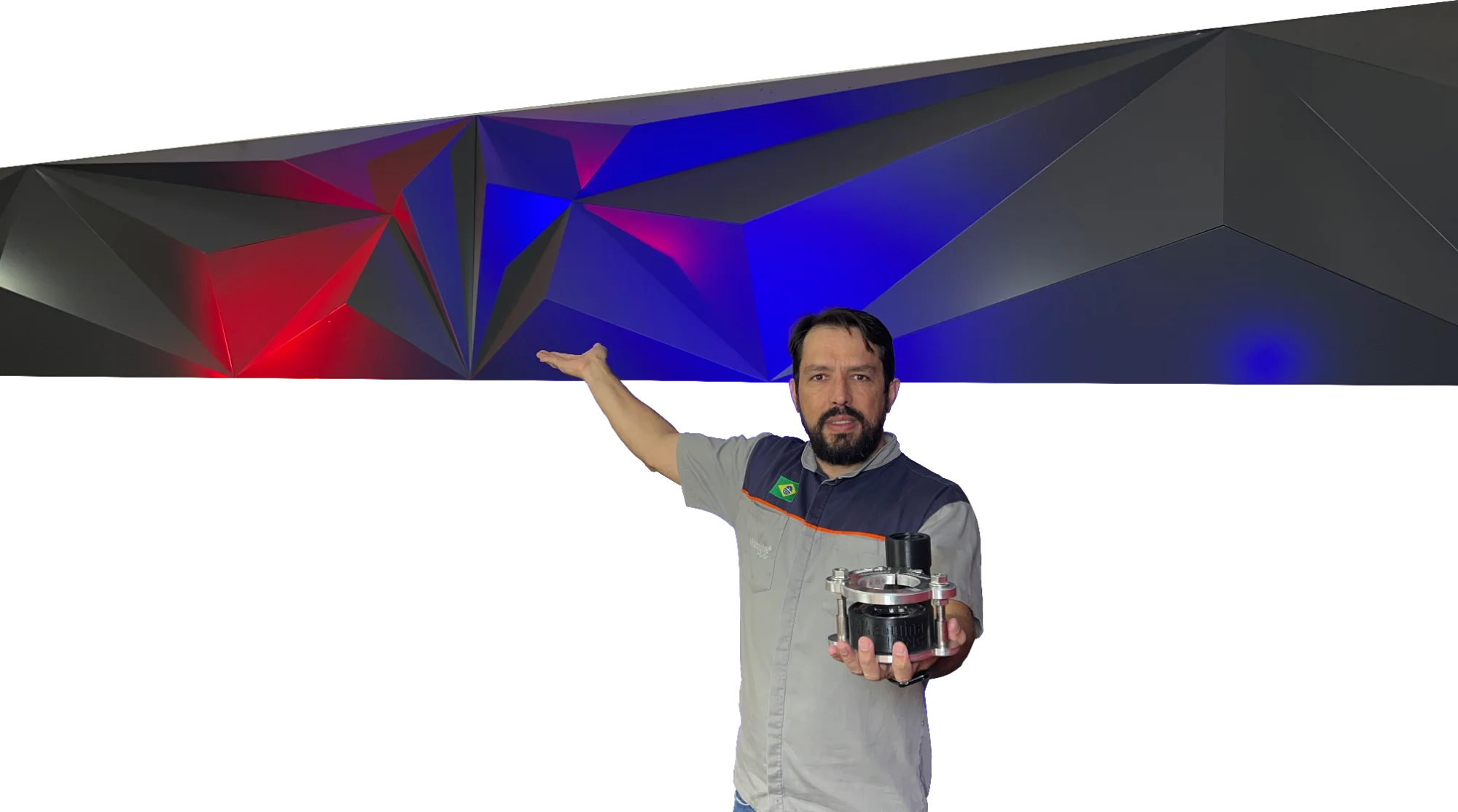
Fernando came out of production, not out of a design office. It was running a CNC router, cutting ACM and delivering jobs to customers on deadline that he got to know the problem from the inside, and understood that nobody was going to solve it for him.
The solution did not come from one attempt. It came from many. Instead of trying to make the table perfect, which nobody had managed in decades, he flipped the logic of the problem: if the surface is uneven, then the tool is what has to follow it.
That reversal produced the Original Floating Head: a system that rides on the material and holds a constant depth, with no operator intervention.
INVENTOR OF THE FLOATING HEAD
The tool follows the panel, not the coordinate
The head rides on the material under controlled pressure. Where the panel rises, it rises; where it drops, it drops. The cutter always holds the same depth relative to the real surface, not to the theoretical programmed position.
Patented with the INPI
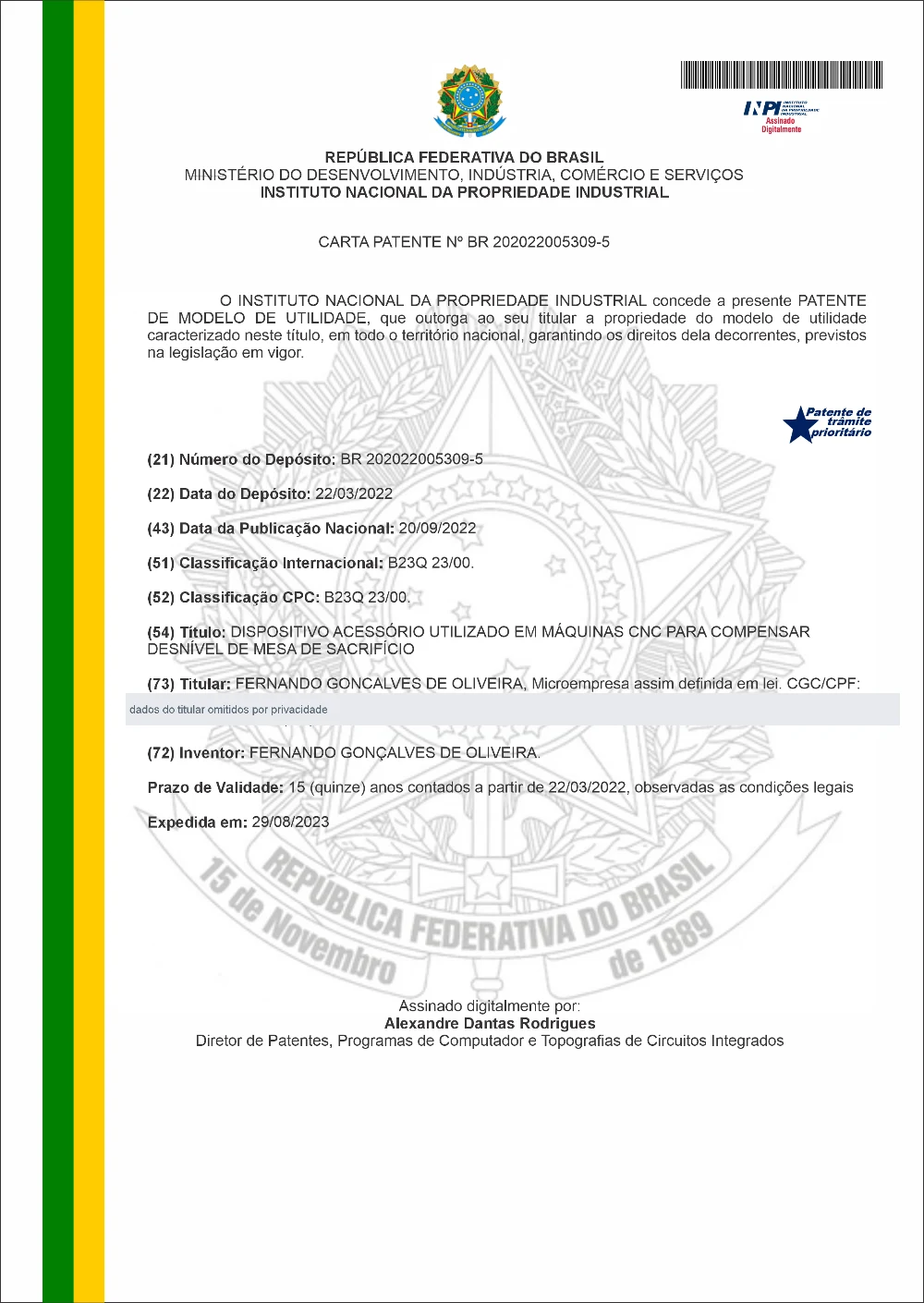
The Original Floating Head is a technology patented with the INPI, the Instituto Nacional da Propriedade Industrial, the federal agency responsible for patent registration in Brazil. The patent certificate was issued in August 2023, under number BR 20 2022 005309-5.
That means two things for the buyer. The first is legal: the invention is recognized by the State as a creation of DaMaquina CNC, and cannot be copied by third parties. The second is practical: there is only one Original Floating Head, developed and built by the people who invented it, with spare parts, support and future improvements all coming from the same source.
The word Original in the name is not a marketing adjective. It is what separates the patented tool from the imitations that showed up after it.

Only on DaMaquina CNC Routers
The Original Floating Head is not sold separately, it is built into our machines. That is how we make sure the tool works with the frame, the drives and the controller it was designed for. Our team will point you to the right model for what you produce.

Stop losing time leveling the table
Talk to a specialist and find out which Router with the Floating Head fits what you produce.